
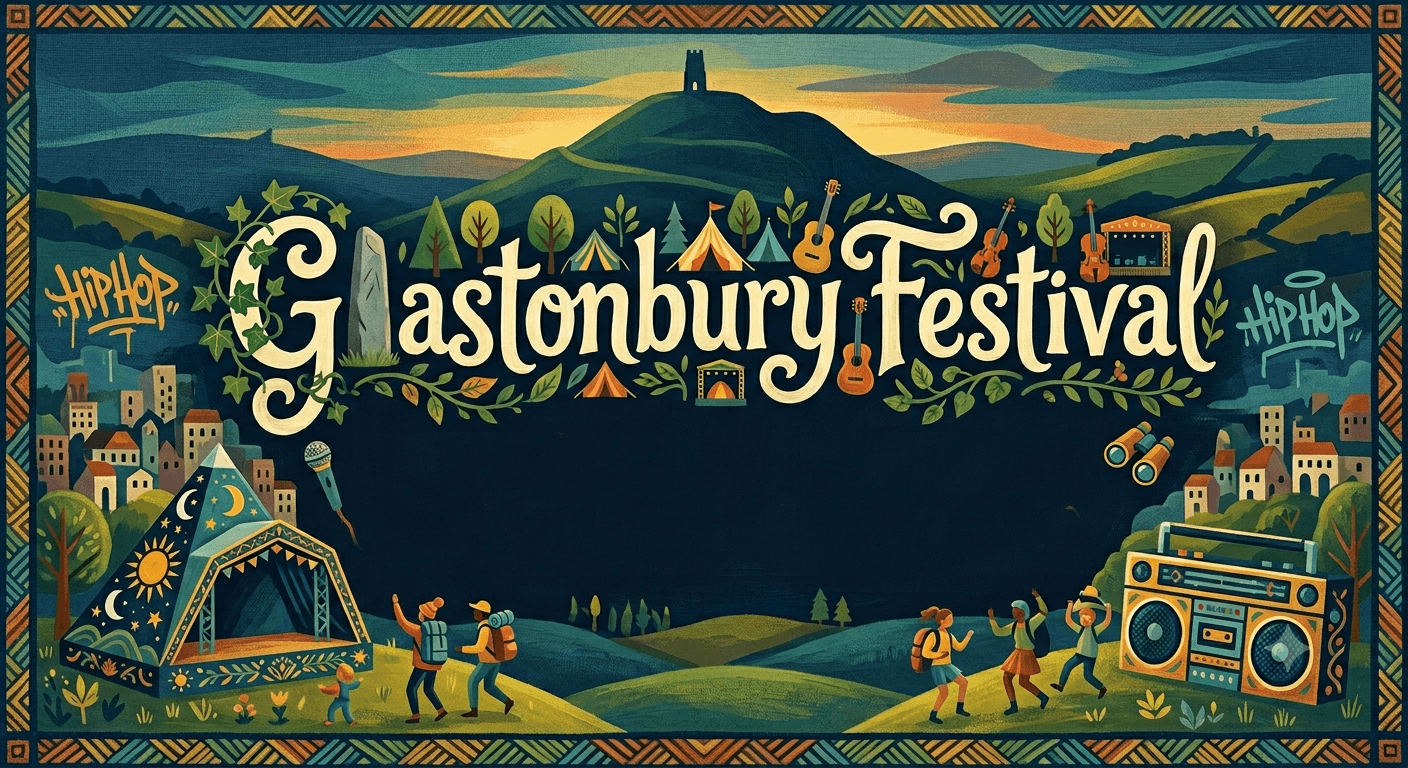
Glastonbury Festival Secrets: Facts Every Music Fan Should Know

Over 200,000 people. One muddy farm in Somerset. And more history packed into five days than most venues see in a lifetime — this is Glastonbury, and you probably don’t know half of it.
There’s a particular kind of magic that happens at Worthy Farm every summer. You can feel it in the air — that electric mix of anticipation, community, and controlled chaos that no other event in the world quite manages to replicate. Glastonbury isn’t just a music festival. It’s a living, breathing institution that has shaped British culture for over five decades. But for all its fame, there are layers to Glasto that even the most devoted fans don’t fully know. So whether you’re a seasoned festival-goer or someone still dreaming of getting tickets, here are the secrets and facts that make Glastonbury unlike anything else on earth.
It Started With a £1 Ticket and a Cow Farm
The story begins in 1970 — not with a grand plan, but with a gut feeling. A Somerset dairy farmer named Michael Eavis had just attended the Bath Blues Festival and came home thinking: I could do this on my land. And so he did.
The very first Glastonbury Festival — then called “Pop Folk & Blues” — took place on Worthy Farm in Pilton on 19 September 1970. Tickets were just £1 and 1,500 people attended. The original headliners were supposed to be The Kinks and Wayne Fontana and the Mindbenders, but both acts dropped out at the last minute. They were replaced by Tyrannosaurus Rex — the band that would later become the legendary T. Rex — fronted by Marc Bolan. For those 1,500 people, it was an accidental piece of music history.
By 1971, it was already evolving. The festival was free that year with an estimated 12,000 people attending, and David Bowie was among the acts on the line-up. It was also the year that changed the skyline of Glastonbury forever — the first Pyramid Stage was constructed, conceived as a one-tenth replica of the Great Pyramid of Giza, built from scaffolding and metal sheeting, and positioned over what was described as a “blind spring” — an underground body of water. To this day, the Pyramid Stage remains the most iconic festival stage in the world.
The Size of It Will Genuinely Shock You
People throw around words like “big” and “massive” when describing Glastonbury, but the numbers need to be heard to be believed.
The perimeter of the site spans over 8 miles and is more than 1.5 miles across. Every single year, around 200,000 festivalgoers set up camp across this enormous stretch of farmland. To put that into context, that’s roughly the population of a city like Oxford or Portsmouth — all descending on a single field in Somerset for five days.
It is the largest greenfield music festival in the world. Walking its stages, fields, and areas genuinely feels like navigating a small city — one that springs up and disappears every summer, leaving the cows to reclaim the land.
The Secret Acts Are One of Its Greatest Traditions
If you’ve ever looked at the Glastonbury lineup poster and noticed a mysterious unnamed slot, you already know about the secret set tradition. Artists from across the musical spectrum have used Glastonbury’s secret slots to debut new material, make surprise comebacks, or simply play without the pressure of a headline billing.
In 2025, the secret “Patchwork” slot was ultimately revealed to be Pulp — performing on the Pyramid Stage for the first time since their iconic headlining set in 1998, and their first appearance at the festival since a secret Park Stage set in 2011. The reveal sent fans into a frenzy, because that’s exactly what Glastonbury secret sets are designed to do: turn an ordinary afternoon into a moment you’ll talk about for years.
Some of the Biggest Names in Music Have Turned It Down
It seems almost impossible to believe, but a number of the world’s biggest artists have either refused to play Glastonbury or simply never made it to the stage.
Fleetwood Mac are among the most heavily anticipated acts to never play the Pyramid Stage. It reportedly came very close to happening for the planned 50th anniversary, but the group ultimately refused due to the relatively low performance fee on offer. Emily Eavis, who now runs the festival alongside her father, has explained that artists typically receive less than 10% of what they would earn at other major British festivals.
That fee issue is more common than people realise. Bruce Springsteen’s 2009 headline set — during which he played for a whopping three hours straight — actually resulted in Michael Eavis being handed a £3,000 fine because The Boss pushed past the festival’s strict noise curfew. Other artists who never made it to Worthy Farm include Led Zeppelin and Depeche Mode.
It’s Given Over £20 Million to Charity
This is the fact that tends to surprise people most. For all the revelry, the mud, and the headline drama, Glastonbury has a deeply philanthropic soul.
Every year, Glastonbury is partnered with WaterAid, Oxfam, and Greenpeace, and supports more than 750 local charities. Since 2000, the festival has contributed over £20 million to charitable causes.
In January 2025, it was reported that the festival had doubled its profit to £5.9 million pre-tax for the year ending March 2024, while donating £5.2 million to charitable organisations in the same period. That’s not a corporate sponsorship vanity project — that’s a music festival putting serious money where its values are, year after year.
The Biggest Crowd in History Wasn’t Officially Invited
Here’s one for the history books. The single biggest crowd ever recorded at Glastonbury didn’t show up because they had tickets.
It’s thought that The Levellers in 1994 drew the biggest crowd at Glastonbury. Thanks to a significant number of gatecrashers, their set pulled in an estimated crowd of 300,000 people — with Michael Eavis himself acknowledging that “the fence wasn’t good enough.”
The security operation today is a world away from that era. The perimeter fence, the wristband system, the multi-layered access controls — all of it evolved directly from those chaotic early years when Glastonbury’s gates were more suggestion than barrier.
The Pyramid Stage Has Its Own Mythology
The Pyramid Stage isn’t just a stage. It’s a landmark. People navigate the entire festival site by it, and its design has meaning baked into every angle.
As mentioned, the original version was built in 1971 as a one-tenth scale replica of the Great Pyramid of Giza. The current steel structure has evolved significantly since then, but the spiritual and symbolic intention of the original design — placed deliberately over an underground spring — speaks to the countercultural roots that Glastonbury has never quite shaken off, no matter how mainstream it’s become.
The stage has hosted everyone from David Bowie to Beyoncé, from Stormzy to Adele. In 2022, Sir Paul McCartney headlined the Pyramid Stage at the age of 80, making him the oldest artist ever to headline the festival’s main stage. In 2025, Rod Stewart equalled that record, also taking the stage at 80 years old.
The Fallow Year Is a Deliberate Design
One of the questions that confuses newcomers most: why isn’t there a Glastonbury every year?
The answer is both practical and poetic. There will be no Glastonbury in 2026 due to the farmland needing time to recover. Known as “fallow years,” these breaks allow the grass and the land to rest after over 200,000 people have spent five days on it. The next Glastonbury Festival is scheduled to take place in 2027.
There’s something rather wonderful about that. A festival rooted in a working farm still respects the land it sits on. The cows, the soil, the grass — they get their year back.
Tickets Sell Out in Minutes — Every Single Time
If you’ve ever tried to get Glastonbury tickets, you already know the pain. If you haven’t, prepare yourself.
Tickets for the 2025 festival went on sale on 17 November 2024 and sold out in just 35 minutes. The full weekend price was £373.50 plus a booking fee — a significant investment, but one that includes five nights of camping, access to hundreds of stages, and the kind of experience that people plan their entire year around.
The registration system — which requires everyone to upload a photo before they can even attempt to buy a ticket — was introduced specifically to combat ticket touting. It’s one of the most imitated anti-tout systems in the live music industry.
The BBC Has Been Its Broadcasting Partner Since 1997
You might catch highlights of Glastonbury on TV without thinking much about it, but the BBC’s relationship with the festival is one of the most significant broadcasting partnerships in British music.
For the 2025 festival, BBC Radio 6 Music was named the official “radio home of Glastonbury,” with coverage including livestreams of all five main stages, on-demand sets on BBC iPlayer, and live broadcasts across BBC One, Two, and Four. For millions of people in the UK — and music fans watching internationally — the BBC’s Glastonbury coverage is the closest most will ever get to being there.
Why Glastonbury Still Matters
In an era of streaming, algorithmic playlists, and music that often feels engineered for 30-second virality, Glastonbury is stubbornly, defiantly analogue in the best possible way. It’s about standing in a field with strangers, waiting for a band you love to walk on stage, and sharing that moment with 200,000 other people who came from all over the country — and the world — to be exactly where you are.
From a £1 ticket on a Somerset dairy farm to a five-day global cultural event. From 1,500 people to 200,000. From a hastily assembled Pyramid Stage over an underground spring to one of the most recognisable stages in music history.
Glastonbury has never really changed what it is at its core. It’s just kept getting bigger, louder, and more important. And if you’ve never been — well, 2027 is your next chance. Start planning now.

Music Times
Music journalist and cultural critic at MusicTimes.