
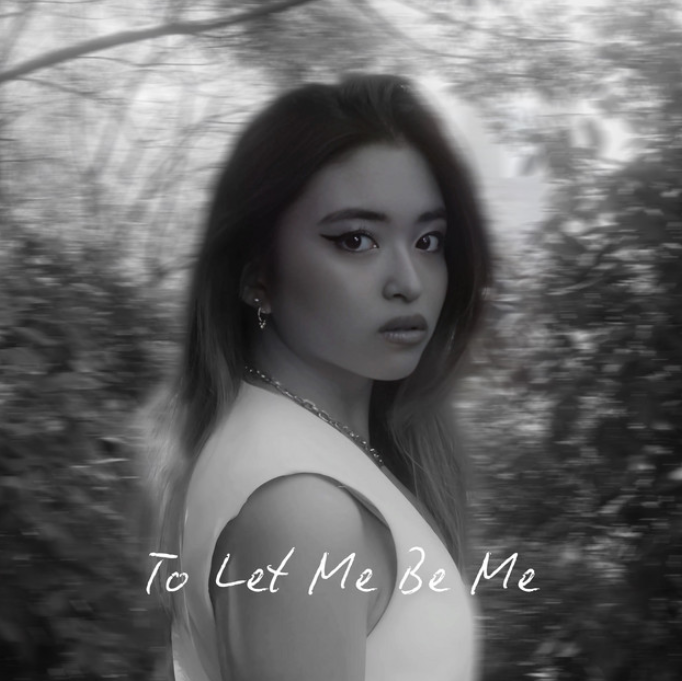
Miu Sato’s EP Gives Voice to the Experience of Existing Between Cultures

There is a particular kind of vulnerability that comes from never feeling entirely rooted in one place. On To Let Me Be Me, Miu Sato transforms that feeling into something intimate, melodic, and deeply human. The forthcoming EP, out September 18 via Joy Machine Records, explores identity, belonging, and the complicated process of figuring out who you are when your sense of home has always existed across borders. Rather than offering easy answers, Sato allows the uncertainty to become part of the story.
As a proud Third Culture Individual, Sato has spent much of her life moving between Singapore, Taiwan, Hong Kong, and New York. That experience sits at the emotional center of the project. Her songs capture the instinct to adapt, to observe, and to become what each new environment seems to require. Yet beneath that adaptability is a quieter question that runs throughout the EP: what remains when you stop trying to fit into every version of yourself that others expect?
The project’s first two singles, “Who Do I Wanna Be” and “Hold On,” offer a compelling introduction to that journey. Both songs balance contemporary production with the immediacy of singer-songwriter storytelling, creating space for Sato’s voice and perspective to remain at the forefront. Their consideration for the GRAMMY® Award for Best Arrangement, Instruments and Vocals speaks to the care embedded in their construction, but their greatest strength is their emotional clarity. These are songs that feel less like declarations and more like conversations with oneself.
That sense of authorship extends across the EP. Sato contributes to the songwriting, arranging, orchestrating, producing, mixing, and piano performance, giving To Let Me Be Me a cohesive creative identity. Collaborators including vocalist Carlotta Romano, co-producer and co-mixer Archie Lewis-Harris, and arranger Sam Russo help expand the project’s sonic world without pulling attention away from its central perspective. The result is a record that feels carefully constructed while retaining the warmth and imperfection of something deeply personal.
Ultimately, To Let Me Be Me is about giving yourself permission to exist without constantly translating who you are for someone else. Sato’s story may be shaped by multiple cultures, cities, languages, and communities, but the emotions at its core are remarkably universal. For anyone who has ever felt caught between identities, or wondered where they truly belong, the EP offers something more valuable than a definition of home. It offers the freedom to understand that belonging can begin with simply letting yourself be yourself.

Lucas Watson
Music journalist and cultural critic at MusicTimes.