
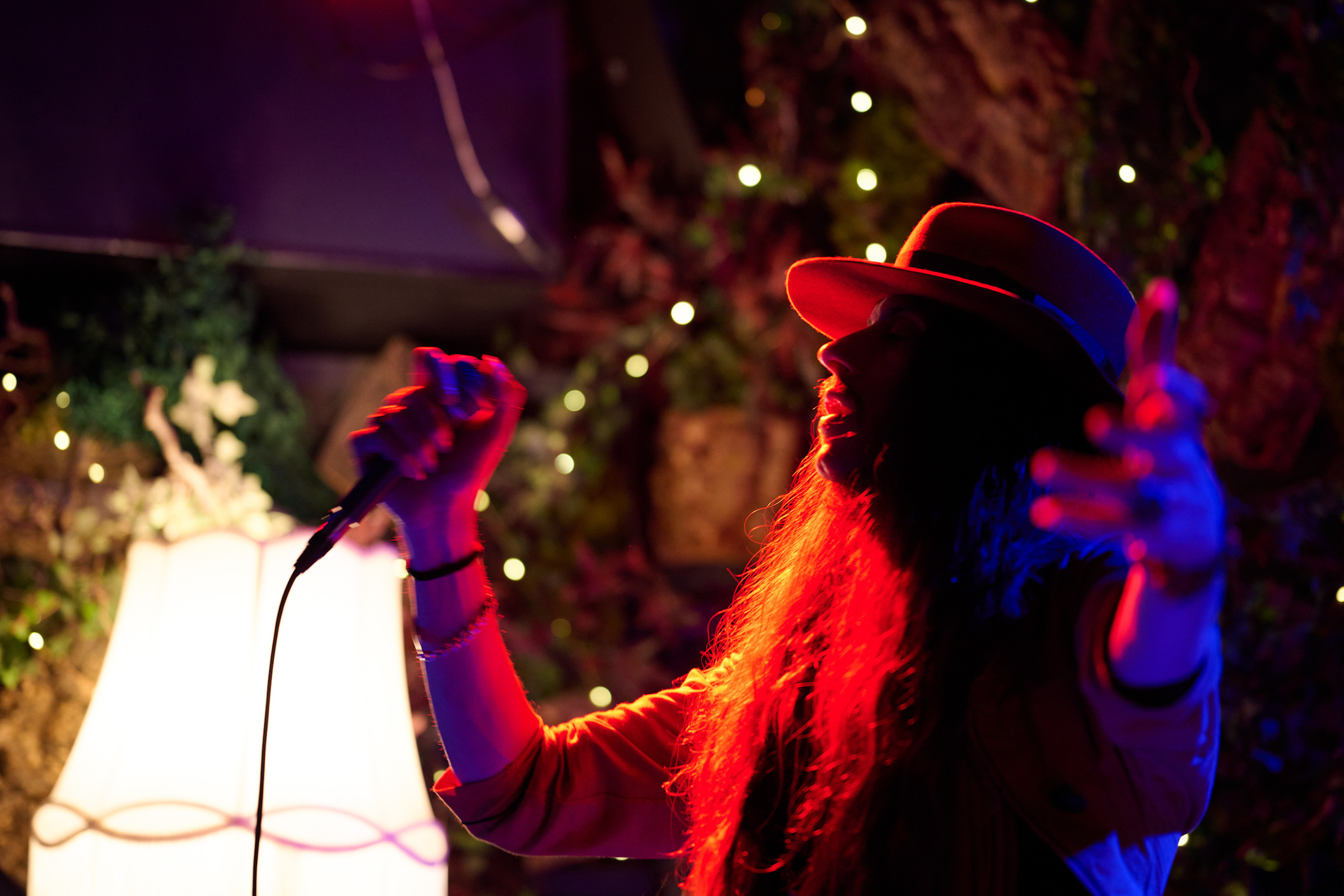
How El Niño de la Pili Is Quietly Redrawing the Boundaries of Spoken Word

Brighton was already beginning to lean towards England’s World Cup meeting with Panama. White shirts drifted between pubs, conversations inevitably turned to predicted scorelines, and television screens were quietly being prepared long before kick-off. A few streets away, however, another queue had formed for a very different reason. Outside Folklore Rooms, people waited patiently beneath the fading evening light, some speaking Spanish, others English, most simply curious about what they were about to witness. The anticipation felt genuine rather than fashionable, built less on hype than on recommendation. More than one conversation began with the same phrase:
“Someone told me I had to see this.”
The buzz surrounding the performance stems from the unique nature of the project. El Niño de la Pili is the alter ego of Mario, a performer whose work bridges the gap between traditional Andalusian folklore, contemporary electronics, and Anglo-Saxon spoken word traditions. By taking elements of traditional flamenco poetry and reframing them through modern loop stations and synthesisers, his work challenges the rigid boundaries of both musical genres and performance poetry, presenting identity not as a fixed heritage, but as a living, fluid conversation.
Folklore Rooms has never been a venue designed to overwhelm. Its charm lies in precisely the opposite. Before reaching the performance space, visitors negotiate a narrow staircase that naturally slows everyone down. By the time they reach the room upstairs, the pace has already changed. Candles flicker across wooden tables. Half-finished pints share space with empty glasses waiting to be collected. The scent of beer hangs comfortably in the air, softened by warm lighting and old timber. Audience members continue squeezing between tightly packed chairs while staff navigate impossible-looking routes with trays balanced above shoulder height.
Conversations ebb and flow beneath the constant sound of glasses meeting tabletops and footsteps crossing wooden floorboards.
There is no sense that the room is waiting for an entrance. Mario is already standing on stage.
There is no announcement, no blackout and no reveal. Instead, he simply observes the audience as people continue settling into their seats, exchanging greetings, removing coats and ordering one final drink before the performance begins. It subtly alters the relationship between performer and audience. Rather than entering their world, he appears to invite them into his.
That small decision subtly defines the evening.
Over recent months, following appearances in Newcastle, Brixton and now Brighton, it has begun to feel increasingly unusual to instinctively describe El Niño de la Pili as a newcomer in the United Kingdom. The label still appears from time to time, but it sits less comfortably with each successive performance. Familiar faces return. Audience members greet one another from previous concerts. The curiosity surrounding the project has not disappeared, but it is gradually being replaced by recognition.
The opening moments are marked by restraint rather than volume. Karmen unfolds patiently, a slow-burning piece where acoustic guitar samples loop in cyclical patterns, leaving generous spaces between phrases and allowing the room to settle into its own rhythm. The audience responds instinctively.
Conversations fade without being silenced. Glasses are placed back onto tables a little more carefully than before. Somewhere near the back, the bar continues operating, but even the ordinary sounds of a working venue begin to feel quieter.
No Es Por Ti gently raises the emotional temperature without disturbing that concentration, introducing a deep, rhythmic bassline that pulses underneath a stark, declamatory delivery. Several listeners lean forward almost unconsciously. Others remain perfectly still, their attention fixed on the stage.
The performance never hurries towards obvious climaxes, preferring to let individual moments breathe.
Then the electronic pad appears.
Its introduction is handled with remarkable patience. Mario does not immediately demonstrate its possibilities. Instead, his hands hover above the instrument for several silent seconds before the first touch releases a solitary fragment of sound. Another follows. Then silence returns. Each trigger feels deliberate, as though every sample has been placed exactly where it belongs rather than simply layered for effect.
Gradually, textures begin to accumulate. Short vocal fragments emerge and disappear. Rhythmic pulses surface briefly before dissolving into spacious electronic ambience. The instrument becomes less a source of accompaniment than a way of shaping memory itself. Nothing feels hurried. Nothing feels decorative. Every sound seems chosen because it contributes to an unfolding narrative rather than because it attracts attention.
Instead of functioning as a display of technology, the electronic pad ultimately becomes an extension of the spoken narrative itself. Individual samples emerge sparingly, leaving generous space between each intervention and allowing electronic textures to support memory rather than overwhelm it.
Technology never feels like the subject of the performance. Instead, it naturally becomes another voice within the conversation.
The atmosphere inside Folklore Rooms changes almost imperceptibly.
The steady movement between tables slows. A member of staff pauses momentarily while carrying drinks across the room. Someone reaches for a glass before deciding against it. Even the familiar noises of a busy venue, the scrape of a chair, the distant clink of bottles behind the bar, footsteps crossing the wooden floor, begin to occupy the same fragile space as the music itself.
Then comes a single sentence. “My father’s name is Rogelio, but you can call him my blood.”
There is no emphasis attached to the words. They are delivered plainly, allowing their emotional weight to arrive without instruction. The electronic textures continue underneath, never competing for attention, simply holding the silence together as though they were another voice in the conversation.
A few moments later: Triana.
Its tone shifts the atmosphere even before the sample finally arrives.
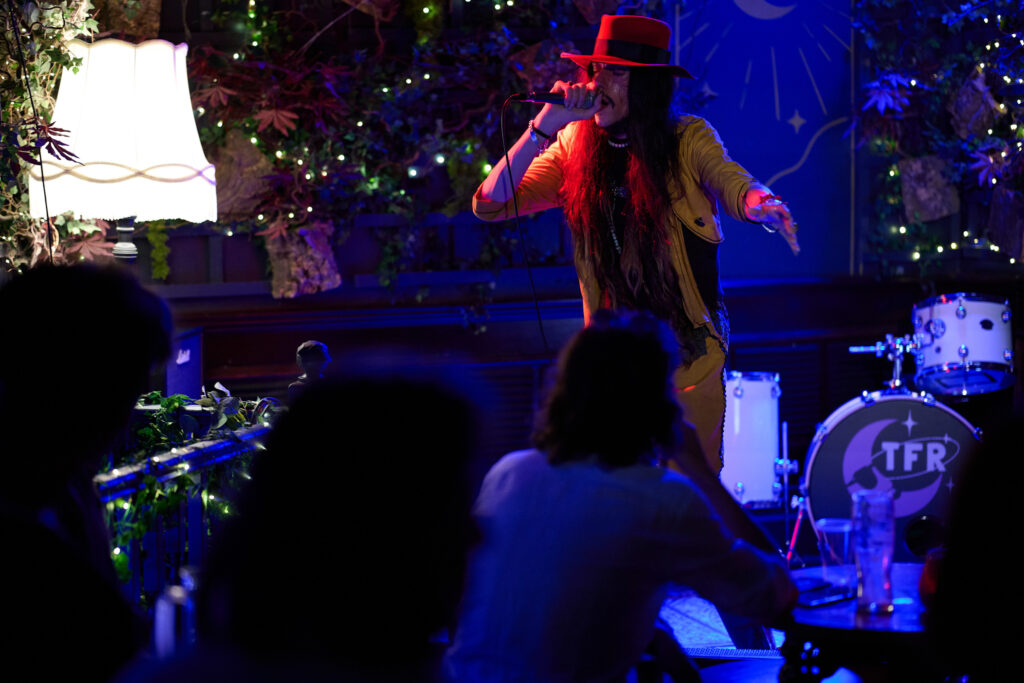
The room falls completely still. Not the polite silence expected during an acoustic performance, but the deeper kind that emerges when dozens of strangers independently decide that even the smallest movement would somehow interrupt what is happening.
Nobody speaks. Nobody reaches for another drink. One glass shifts almost imperceptibly across a wooden table as someone slowly removes an elbow, and the faint sound seems unexpectedly loud.
The silence becomes part of the performance.
Instead of rushing forward, Mario allows it to remain exactly where it is.
The electronic pad continues breathing quietly beneath the spoken voices, creating a space where flamenco, memory, family history and something resembling contemporary spoken word briefly occupy the same emotional landscape without demanding names or categories.
For several minutes, Folklore Rooms feels suspended between listening and remembering.
“No me llames Rogelio. Llámame Papá.”
The spell is broken not by applause but by movement. A chair shifts. Someone quietly exhales. A member of the audience looks across the room as if checking that everyone else has experienced the same moment. Only then do the first claps arrive, measured rather than explosive, acknowledging not simply a performance but the silence that had preceded them.
Without ceremony, God Save the Queen follows. It arrives without irony or confrontation, existing instead as another cultural reference placed alongside everything that has come before. Throughout the evening, Mario avoids presenting identities as opposing forces. British and Spanish traditions are allowed to coexist naturally, without explanation or justification. The audience seems perfectly willing to accept that invitation.
Chela Chele restores movement to the room almost instantly, driven by an upbeat, syncopated rhythm that feels closer to urban street styles. Feet begin tapping beneath tables before the chorus arrives. Then something quietly remarkable happens. Much of the audience, despite being largely made up of native English speakers, begins singing the chorus loudly in Spanish from beginning to end. It never feels prompted or rehearsed. Instead, it sounds like the natural consequence of a performance that has gradually dissolved any hesitation between stage and audience. Glasses slide across wooden tabletops as people relax back into their chairs. The bar resumes its quiet rhythm, staff threading carefully between tables with fresh drinks while politely asking people to move their legs. The performance never asks the venue to stop being itself; instead, it absorbs every ordinary sound into its atmosphere.
Al Son Son Son pushes that feeling further, blending traditional hand-clapping (palmas) with synthetic hi-hats. Several audience members begin keeping time almost unconsciously with their hands ever feeling disconnected, and moments of darkness arrive naturally after periods of remarkable emotional intensity.
“It felt less like being at a standard gig and more like being pulled into a collective memory,” noted an audience member near the bar afterwards. “You didn’t need to understand every word of Spanish to feel the exact weight of what he was saying.”
Me Arrebuyea brings one of the night’s most physical reactions, built on a driving, up-tempo cadence that commands attention. Applause breaks out before the final notes have disappeared, while cheers bounce briefly off the low ceiling. Yet even in its most energetic passages, the performance resists becoming merely celebratory. There always seems to be another quiet corner waiting just beyond the next song.
That restraint returns with Lontano por Dentro, a minimal piece featuring long, echoing vocal drones and sparse spoken commentary. Its quieter passages seem almost impossible inside a room where glasses continue clinking and conversations occasionally drift in from the staircase below. Yet those sounds never become distractions. Instead, they reinforce the feeling that this music belongs among ordinary life rather than outside it. A bottle is placed gently on the bar. Someone whispers an apology while squeezing past another chair. None of it breaks the atmosphere. Somehow, it strengthens it.
Dorme Bu continues in a similarly understated register, using low-frequency atmospheric hums that cradle the delivery. Very little appears to happen on the surface, yet the room remains entirely absorbed. Perhaps the most significant aspect of the evening lies in its relationship with spoken word itself. Rather than functioning as introductions, explanations or pauses between songs, spoken passages assume the same structural role as melody and rhythm. Speech becomes musical architecture in its own right, carrying emotional weight without ever abandoning the intimacy of conversation. It quietly suggests possibilities that extend beyond conventional ideas of either flamenco or spoken word, without ever feeling the need to announce them.
Darkness returns with La Estankera de Vallekas, a narrative track with a sharp, rhythmic cadence that lifts the room once again before sentimentality has time to settle. Audience members exchange knowing glances across neighbouring tables, even when not every cultural reference is immediately familiar.
The evening repeatedly demonstrates an unusual confidence in contrast. Intimate spoken passages give way to rhythm without ever feeling disconnected, and moments of darkness arrive naturally after periods of remarkable emotional intensity. The stories remain accessible because they are told through observation rather than explanation.
Perfect Strangers proves equally revealing, adapting familiar melodic fragments into a haunting electronic soundscape. Instead of feeling like an unexpected detour, it slips naturally into the evening’s broader emotional landscape, reinforcing the sense that repertoire here is chosen according to feeling rather than geography.
One image inevitably comes to mind, albeit in reverse. Mario introduces a sample from Santana’s Woodstock performance before his already highly recognized Acuérdate (remember me). Here the relationship almost appears inverted.
Rather than chasing the room’s energy, the room spends much of the evening gradually catching up with the emotional space Mario has already created.
By the time Chapala begins, its rhythmic foundation built on warm synth pads, applause greets the opening moments before the music has properly unfolded.
It is less an expression of familiarity than of trust. The audience has stopped wondering where the evening might go and simply follows wherever it chooses to lead.
La Gitanika de Can Puchere closes the performance without unnecessary grandeur. There is no obvious attempt to manufacture a triumphant finale.
Instead, the final song gathers together the threads that have quietly run through the entire evening: family, memory, darkness, rhythm, silence and conversation. The applause that follows feels earned rather than requested.
Long after the final notes disappear, very few people seem eager to leave.
Empty glasses wait to be collected. Candles continue burning on the wooden tables. Conversations begin again in lowered voices, as though the room itself has not quite returned to its ordinary volume. People stand patiently beside the narrow staircase, allowing others to pass before making their own way downstairs. What lingers is not the feeling of having witnessed a performance intent on proving its originality, but one quietly unconcerned with categories altogether. Throughout the evening, flamenco, electronic textures, storytelling, darkness, family memory and spoken word coexist without competing for definition. Every element appears to serve the same artistic purpose: allowing memory to become rhythm, silence to acquire musical weight, and language itself to function as music.
Outside, Brighton continues preparing for football.

Music Times
Music journalist and cultural critic at MusicTimes.