
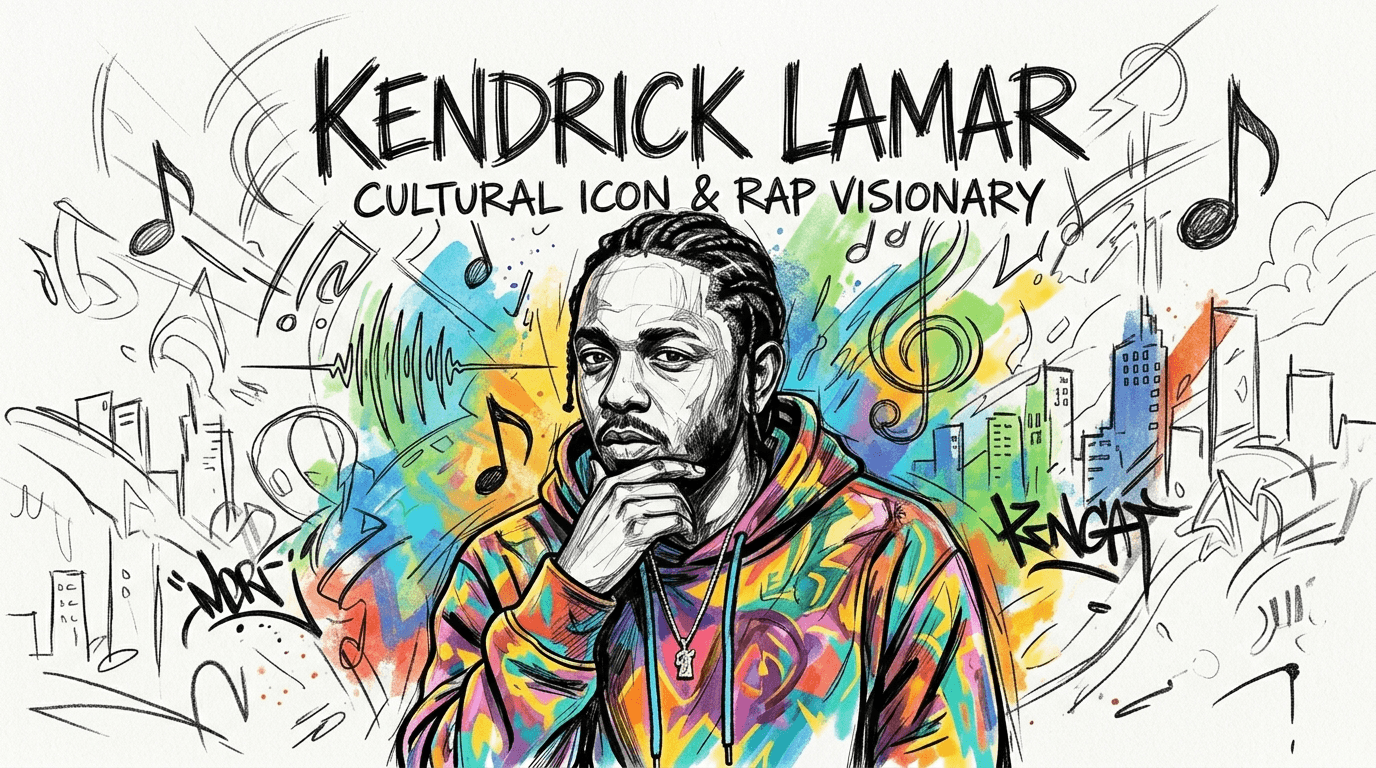
What Is the Meaning Behind Kendrick Lamar’s Latest Song?

A Grammy-winning love letter, a soul legend’s legacy, and the softest side of the hardest rapper alive — “luther” is not what anyone expected, and that’s exactly the point.
When Kendrick Lamar dropped GNX without a single warning on November 22, 2024, the internet collectively lost its mind. No rollout. No press run. No teaser campaign. Just Kendrick, doing what Kendrick does — arriving on his own terms and leaving everyone scrambling to catch up. Buried inside that surprise album was a track that would go on to dominate charts for months, win a Grammy for Record of the Year, and become the biggest song of 2025: “luther”, featuring SZA.
But what does it actually mean? Why is it called “luther”? And why has it connected with tens of millions of people in a way that even his most razor-sharp diss tracks couldn’t quite replicate?
Let’s break it all down.
Who Is “Luther” Named After?
The title is a direct tribute to Luther Vandross — one of the greatest R&B voices of all time. The song samples the 1982 recording of “If This World Were Mine” as performed by Luther Vandross and Cheryl Lynn, itself a cover of the iconic Marvin Gaye and Tammi Terrell original from 1967.
This wasn’t a casual flip. When Kendrick accepted the Grammy for Record of the Year at the 68th Grammy Awards, he made his intentions crystal clear, saying: “This is what music is about: Luther Vandross. He’s one of my favorite artists of all time… When we got that clearance, we all dropped a tear because we know how much he and Cheryl Lynn poured into that record.”
That quote tells you everything. This song is an act of reverence — Kendrick reaching back through decades of Black musical history and saying: this lineage matters, and I intend to honour it.
The Core Message: Love, Protection, and a Better World
At its heart, “luther” is a romantic fantasy — and a deeply tender one at that. The song imagines what Kendrick would do for the person he loves if the world were his to reshape. It’s aspirational love: not just “I care about you,” but “if I had ultimate power, I would use it entirely for your wellbeing.”
Kendrick opens the track with a striking line, calling his partner “Roman numeral seven” — a reference loaded with biblical meaning. In scripture, seven represents completion, perfection, and divine fulfilment. On the seventh day of creation, the world was whole. By calling his partner “seven,” Kendrick is saying she is his completion — his perfection.
From there, the verses build a world where he would multiply her dreams, confront her enemies before God, and shield her from every source of pain. It’s protective love elevated to something almost mythological.
SZA, for her part, grounds the song in beautiful contrast. While Kendrick reaches for the grandiose, her vocals add warmth and emotional texture — a softness that keeps the track from ever feeling boastful. Her chorus paints a picture of resilience: concrete flowers growing, heartache being processed, better days on the horizon. It’s the kind of imagery that hits differently at 2am.
Why “luther” Sounds Different From Anything Else on GNX
If you listen to GNX from start to finish, “luther” arrives as a genuine breath of air. The rest of the album is assertive, combative at times, packed with West Coast bravado and the swagger of a man who just won the biggest rap beef in a generation. Then “luther” walks in with a smooth, Spanish-inspired guitar lick, 808 drums, hi-hats, and an orchestral arrangement built around one of soul music’s most beloved melodies.
The production team — Sounwave, Jack Antonoff, Kamasi Washington, and others — created something that feels timeless rather than trendy. Jazz. Soul. Hip-hop. Mariachi undertones that reflect the broader LA identity woven throughout GNX. It’s a sonic collage of Black and Latino musical heritage, sitting together naturally, the way they always have in Compton.
SZA’s vocal chemistry with Kendrick has been building across seven collaborations since 2014, and “luther” is the peak of that creative relationship. Critics immediately noted it — calling the track tender, heartfelt, and a stunning contrast to the album’s more boastful moments.
The Chart Dominance: Numbers That Tell the Story
The song’s cultural reach is almost difficult to comprehend. Here’s what “luther” achieved:
- 13 consecutive weeks at #1 on the US Billboard Hot 100 — making it both Lamar and SZA’s longest-running chart-topper, and the second longest-running hip-hop number one of all time, behind only Lil Nas X’s “Old Town Road”
- The biggest song of 2025 at the halfway point of the year, with 3.9 million copies sold
- 31 nonconsecutive weeks at #1 on Hot R&B/Hip-Hop Songs — the longest reign in that chart’s history
- 47 weeks at #1 on Hot Rap Songs — also a record
- It topped charts in New Zealand, the Philippines, Singapore, and South Africa, and cracked the top 10 in the UK, Australia, and Canada
- At the Super Bowl LIX Halftime Show — watched by 133.5 million people, the most watched halftime show in history — Kendrick and SZA performed “luther” to a global audience
These aren’t just impressive statistics. They are proof that when Kendrick softens his pen, the world leans in even harder.
What the Grammys Said About It
At the 68th Grammy Awards, “luther” won Record of the Year and Best Melodic Rap Performance. For Kendrick, it was part of a historic night — he also won Best Rap Album for GNX and Best Rap Song for “TV Off,” making him the most awarded rapper in Grammy history with 27 career wins.
The Record of the Year win is particularly significant. It’s not a rap-specific category — it’s the top prize in all of music. Winning it with a love song built on a soul sample is Kendrick essentially proving that hip-hop, at its most intentional, belongs at the very top of the musical canon.
The Bigger Picture: Why This Song Matters
“luther” exists in a fascinating moment in Kendrick’s career. GNX was his first album released independently from Top Dawg Entertainment and Aftermath, his first real act of full creative autonomy as a major artist. And what did he choose to do with that freedom?
He made a love song. A proper one. One that tips its hat to Luther Vandross, samples soul legends, layers in jazz saxophone from Kamasi Washington, and invites SZA to co-create something genuinely beautiful.
In an era of hip-hop where toughness is currency and vulnerability is often coded as weakness, “luther” is a quiet act of defiance. It says: the strongest thing I can do is open up. The most powerful statement I can make is tenderness.
That’s the Kendrick Lamar move — arriving somewhere unexpected, and making it feel inevitable once he’s there.
Final Verdict
“luther” is more than just a hit song. It’s a musical heirloom — something that connects Marvin Gaye and Tammi Terrell’s 1967 classic to Luther Vandross and Cheryl Lynn’s 1982 interpretation, and finally to Kendrick Lamar and SZA in 2024. Three generations of Black love songs, threading through time, each one passing the baton to the next.
If you haven’t listened properly yet — headphones in, eyes closed — now is the time.

Music Times
Music journalist and cultural critic at MusicTimes.