
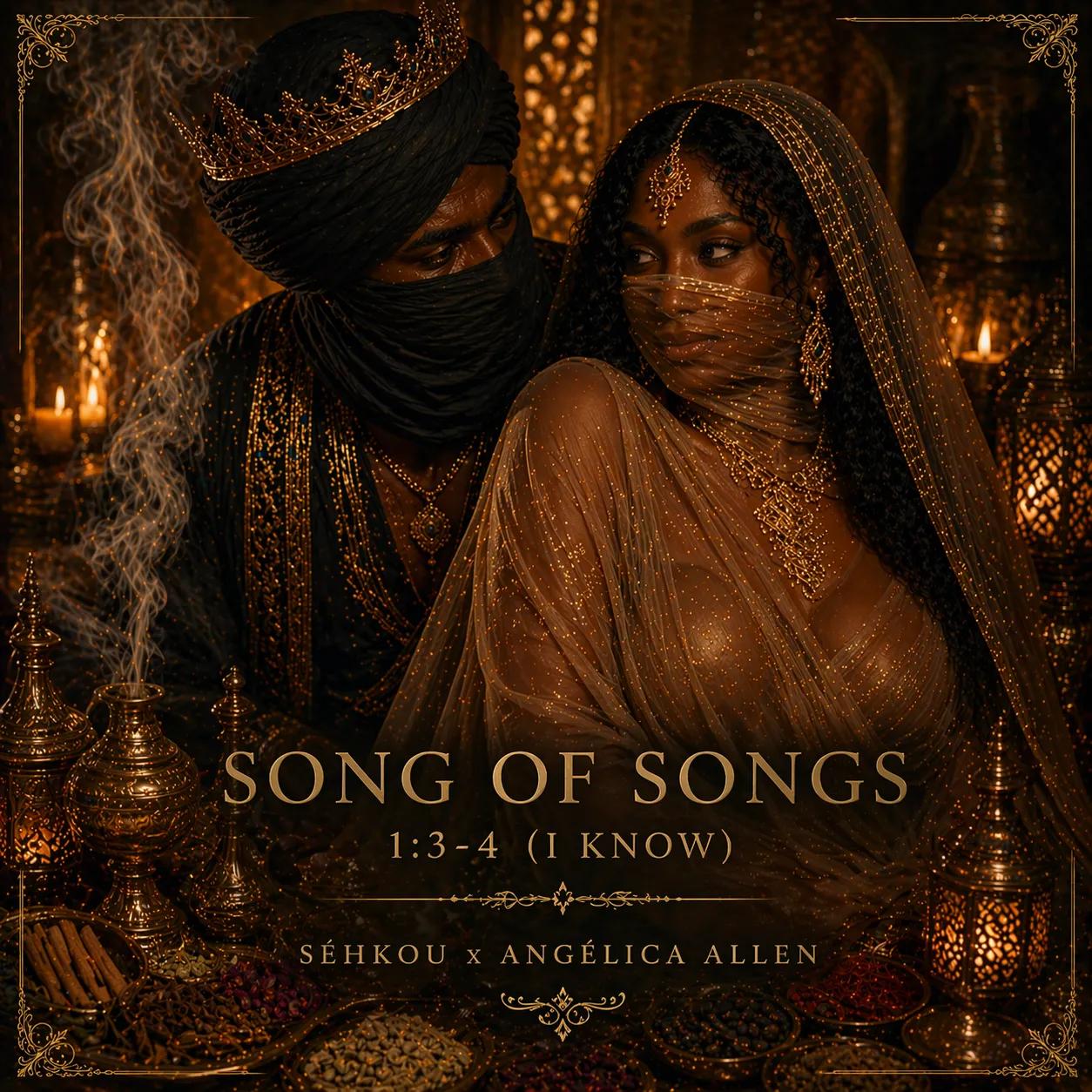
Séhkou: The Faceless Poet Turning Scripture Into Soulful Hip-Hop on “Song of Songs 1:3–4 (I Know)”

In an age when most artists live their careers through selfies, behind-the-scenes clips and constant self-promotion, Séhkou has chosen a very different path. The independent poet and lyricist has decided to keep his identity private, letting cover art, branded visuals and, above all, the music itself do the talking. His latest single, “Song of Songs 1:3–4 (I Know)” featuring Angélica Allen, shows exactly why that decision works. When there is no face to focus on, all that remains are the words, and Séhkou’s words are built to be heard closely.
The choice to stay out of the spotlight puts Séhkou in interesting company. Music fans in the UK will know that anonymity has a long history of creating intrigue rather than limiting it. Burial kept his identity hidden for years while becoming one of the most influential producers of his generation, and the collective SAULT has built a devoted following while revealing almost nothing about its members. Séhkou is working in a very different genre, but the effect is similar. Without an image to sell, his music asks the listener for attention rather than admiration.
That attention is rewarded. Séhkou describes himself as a Christ-centred poet and lyricist, and his sound sits at the meeting point of conscious hip-hop, soul and alternative R&B. He blends intricate rap verses with soulful melodies and passages that lean towards spoken word, so his songs often feel closer to recited poetry set to music than to a conventional single. The result is music that rewards repeat listening, with lines that reveal new meanings the second and third time through.
His new single takes its title and inspiration from the Song of Songs, one of the most poetic and unusual books in the Bible. Rather than focusing on rules or history, the Song of Songs is a collection of love poetry, full of longing, devotion and closeness. Its opening verses speak of a name that is like fragrance poured out and of a beloved who draws the speaker near. Séhkou uses that ancient language as a starting point for a modern reflection on love and intimacy, showing how Scripture can speak to the most personal parts of human life.
Angélica Allen’s presence on the track adds another layer. Her contribution brings a second voice into the conversation, which suits a text that has always been read as a dialogue between two lovers. The pairing turns the record into something like a duet between poetry and melody, with Séhkou’s lyricism and Allen’s vocals working side by side.
What stands out most about Séhkou is his approach to storytelling. He describes his writing as layered and parabolic, drawing on the tradition of parables, where a simple story carries a deeper truth underneath. His songs explore love, grief, intimacy, identity and transformation, subjects that most listeners know well, but he treats them with the patience of a poet rather than the urgency of a hitmaker.
All of these threads come together in SOLUS, the evolving project at the heart of his current work. Rather than presenting a finished album all at once, Séhkou is letting SOLUS grow piece by piece, with each release adding a new chapter. “Song of Songs 1:3–4 (I Know)” is the latest of those chapters and a natural entry point for anyone discovering him for the first time.
For listeners in the UK and beyond who are tired of music that is designed to be scrolled past, Séhkou offers something slower, deeper and more thoughtful. He may keep his face hidden, but his artistry is out in the open for anyone willing to listen.
Stream Séhkou: Spotify | Apple Music | Instagram | YouTube

Music Times
Music journalist and cultural critic at MusicTimes.