

Lurleen Ladd: Reclaiming the Songs, Dreams, and Voice We Were Told to Leave Behind

There are albums that revisit the past, and then there are albums that ask us to reconsider it.
For Austin-based singer-songwriter and entrepreneur Lurleen Ladd, Reclamation belongs firmly in the second category. Built around some of the defining songs of the 1980s, the forthcoming album isn’t simply an exercise in nostalgia. It is an examination of what happens when the dreams, fears and cultural messages of our younger selves are revisited through the eyes of the person we eventually become.
That distinction matters.
The 1980s produced songs that became cultural landmarks—songs about freedom, ambition, relationships, America, identity and the complicated business of becoming an adult. Ladd grew up with those songs. Decades later, she is returning to them with an entirely different set of experiences behind her.
And that changes everything.
The past sounds different when you’ve lived a little longer
Ladd’s relationship with music was never really about the absence of a dream. The dream was always there.
Growing up in Houston, she was drawn to performing from an early age. She danced, sang and performed, but self-doubt repeatedly kept her just outside the spotlight. At one point, that fear was powerful enough to make her leave a college theater class rather than face an audition.
Life subsequently took her somewhere very different.
Ladd established a career in healthcare, working with vulnerable communities and eventually co-founding a successful healthcare business. She also became involved in nonprofit and community initiatives. Music, however, never disappeared.
It waited.
At 38, Ladd finally decided to confront the question that so many people postpone indefinitely: What if I actually tried?
She travelled to Nashville, immersed herself in songwriting, and eventually found herself pushed onto a stage to perform one of her songs. She was nervous. The audience reaction gave her the permission she had perhaps been waiting years to give herself.
She sang another song.
She kept going.
Two decades later, Reclamation feels like the natural consequence of that decision.
This isn’t nostalgia. It’s perspective.
The danger with an album built around familiar songs is that familiarity can become a trap.
Ladd avoids that trap by changing the question.
Instead of asking, Do you remember this song?, Reclamation asks something more interesting:
What does this song mean to you now?
That question gives the project its emotional architecture.
The album revisits iconic material associated with artists including Dire Straits, Rick Springfield, John Mellencamp, Pat Benatar, Robert Palmer, INXS and Bruce Springsteen, but Ladd approaches those songs from the perspective of someone who has experienced adulthood, reinvention, responsibility, uncertainty and the courage required to begin again.
Her version of Dire Straits’ “Walk of Life” offers an early glimpse into that philosophy.
Rather than attempting to recreate the original, Ladd reshapes the song with a darker, more spacious and blues-inflected atmosphere. The result demonstrates why reinterpretation can sometimes reveal more than imitation: the familiar composition becomes a different emotional object when placed inside a new life experience.
Watch: Lurleen Ladd — “Walk of Life”
But Reclamation isn’t interested exclusively in personal reflection.
It also looks outward.
When a song becomes a conversation
Ladd’s recent interpretation of “Pink Houses” makes that particularly clear.
Originally released decades ago, the song carries observations about American life that remain complicated and relevant. Ladd’s version was released on August 26, 2026—Women’s Equality Day—and was accompanied by a collaboration with the League of Women Voters of the Austin Area encouraging women to register to vote.
The recording also features the choir of St. James Episcopal Church in East Austin, adding another layer of history and community to the interpretation.
Here, Ladd demonstrates one of the most interesting possibilities of music: a song doesn’t necessarily become less relevant with age.
Sometimes it becomes more relevant.
We simply have to listen differently.
Watch: Lurleen Ladd — “Pink Houses”
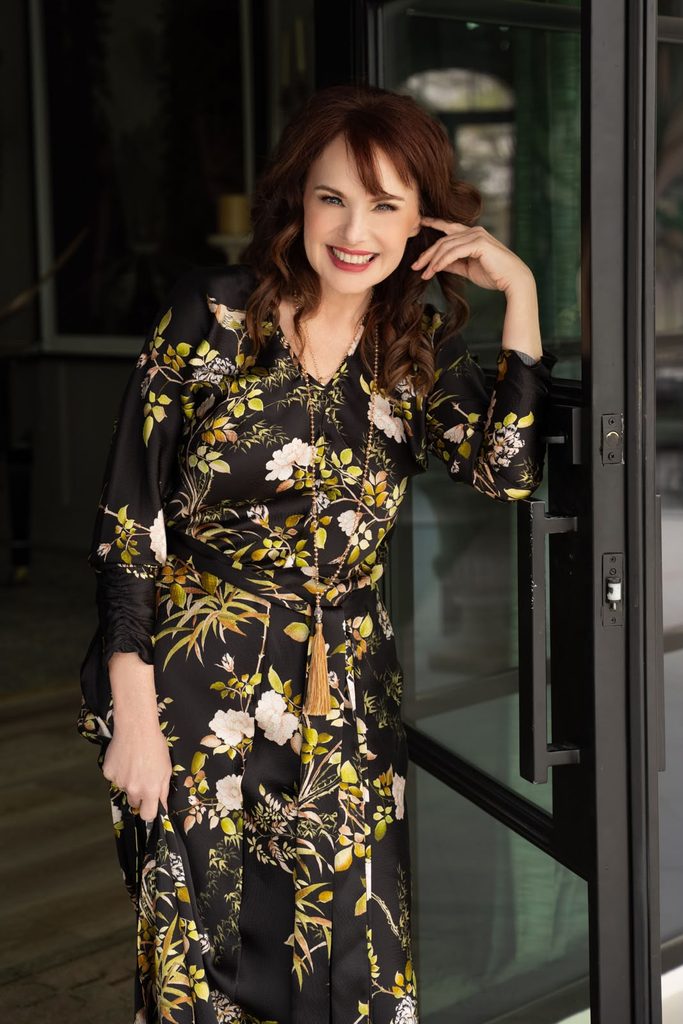
The woman behind the reclamation
There is another story running underneath the album.
It is the story of women, aging and creative permission.
Ladd launched her music career in her 40s, an age at which the entertainment industry can still place unnecessary limitations around who gets to be considered “new,” “relevant” or worthy of attention. Rather than accepting those assumptions, she turned her experience into another creative project: Wavemakers Women and Music, a community designed to amplify women musicians over 40 and create conversations around their experiences in the creative industries.
That makes Reclamation more than a collection of covers.
It becomes an argument for continued possibility.
Not an argument delivered through slogans, but through action.
Ladd is making records.
She is performing.
She is creating platforms for other women.
She is revisiting songs from her youth and giving them new lives.
And perhaps most importantly, she is demonstrating that the timeline we are handed for creativity is not necessarily the timeline we have to follow.
Reclaiming isn’t the same as going backward
The word reclamation can sometimes suggest recovering something that has been lost.
But Ladd’s project suggests another interpretation.
Maybe reclamation is not about returning to who we were.
Maybe it is about returning to the parts of ourselves we abandoned while becoming who everyone else expected us to be.
That makes the 1980s particularly meaningful territory for Ladd.
Those songs belonged to a younger version of her—the girl who loved performing, the woman who doubted herself, the adult who built a career elsewhere, and eventually the artist who decided that waiting was no longer an acceptable strategy.
The songs remained.
She changed.
Now she gets to hear them again.
Only this time, she gets to answer back.
A new chapter, not a backward glance
Reclamation is ultimately about refusing the idea that a person’s most meaningful creative years must belong to their youth.
Ladd’s journey complicates the familiar narrative of the overnight artist. There was no overnight transformation. There were years of work, professional experience, self-doubt, persistence, songwriting and gradual confidence.
That may be precisely why the project resonates.
Because most people don’t wake up one morning and become fearless.
They simply become tired of allowing fear to make their decisions.
Lurleen Ladd’s music occupies that space between memory and momentum. She looks back, but she doesn’t stay there. She takes songs that helped shape an earlier generation and asks what they can say to the person she is today.
And perhaps that is the most compelling idea at the heart of Reclamation:
The dream doesn’t necessarily expire because you postponed it.
Sometimes it is simply waiting for you to become brave enough to claim it.
Reclamation is scheduled for release in October 10, 2026. Ladd’s official music pages feature the new material alongside her previous albums, including Magnolia & Azalea Dreams, No Goin’ Back and Diamonds in the Snow.

Music Times
Music journalist and cultural critic at MusicTimes.